Learner Journey Map
Before downloading this worksheet, make sure to read the instructions below
It will help you answer the following questions:
- What are the key steps in a learner’s journey from discovering a course to completing it?
- What specific actions should course providers take to support each step of the learner’s journey and ensure a cohesive learning experience?
How to use this worksheet:
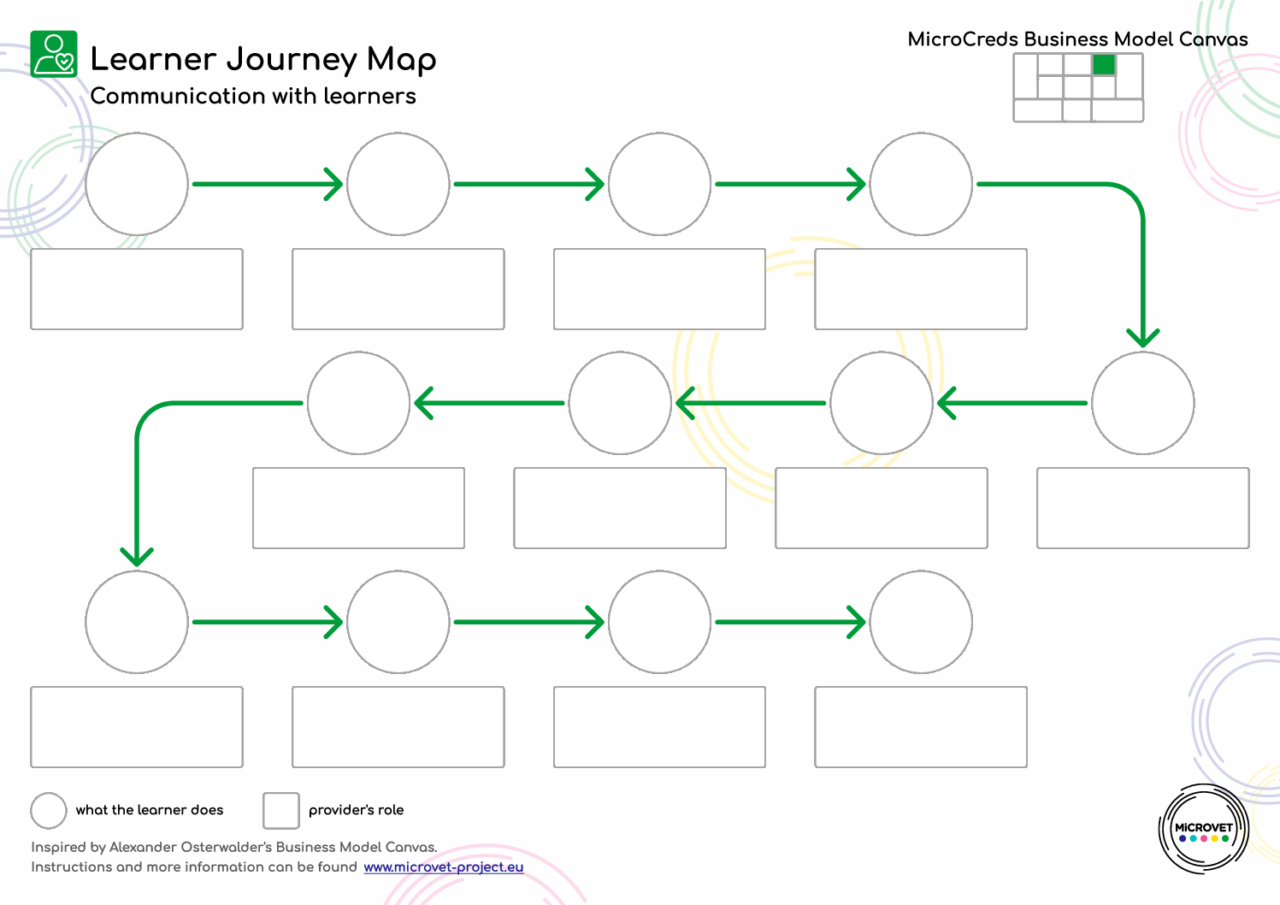
1. Map Each Learner Step (Circles)
What the Learner Does:
Examples of Learner Steps:
- Discover Course Information: The learner finds out about the course through marketing channels.
- Register and Apply: The learner registers or applies for the course through the application system.
- Begin Learning: The learner accesses course materials, completes onboarding, and begins their studies.
- Engage in Learning Activities: The learner actively participates in course activities, assignments, and discussions.
- Seek Support: The learner reaches out for guidance or support, either from peers, mentors, or instructors.
- Complete Course Requirements: The learner finishes all modules, assessments, and receives certification.
2. Define Provider Actions for Each Learner Step (Rectangular Boxes)
Provider’s Role
Examples of Provider Actions:
- For Discover Course Information, the provider should have a marketing plan in place that includes social media advertisements, newsletters, partnerships with employers, and course information available on the website.
- For Register and Apply, the provider should set up an online application portal, maintain it regularly, and have a process to review and approve applications promptly.
- For Begin Learning, the provider should offer an orientation module, guide learners on using the learning platform, and provide contact information for learner support.
- For Seek Support, the provider should ensure that mentors or support staff are available, create a support system (e.g., chat, email), and provide access to peer groups or forums.
- For Complete Course Requirements, the provider should track learner progress, offer reminders for pending assignments, and manage the certification or credentialing process once the learner completes all requirements.
3. Include Communication and Engagement Points
Examples include:
- Welcome Message: Sent upon registration to provide access instructions and introduce available support resources.
- Progress Updates: Regular reminders of deadlines or upcoming modules.
- Feedback on Assessments: Constructive feedback provided after assignments to keep learners engaged and improve their skills.
- Course Completion Congratulations: Acknowledgement of course completion and details on certification.
- Engagement Strategies: Consider including methods to maintain motivation, such as gamification (e.g., badges, progress tracking), social interaction (e.g., peer discussions), and milestone rewards.
4. Review and Adjust the Journey Map
Tips for Effective Use:
- Align with Learner Needs: Use insights from the Learner Persona Worksheet and Value Proposition Worksheet to ensure each step supports the learner’s needs and expectations. Think from the learner’s perspective—what will they need at each stage?
- Be Specific: Clearly define each learner action and the provider’s corresponding support. Detailed planning will help create a smooth, engaging journey.
- Keep Learners Engaged: Plan for consistent communication, relevant feedback, and motivational elements to keep learners focused and connected.
- Ensure Smooth Transitions: Make sure each step flows seamlessly into the next, with clear provider actions to support progression.
- Refine and Improve: Revisit the journey after each learner cohort. Use learner feedback to refine and enhance the experience.
Preview