Curricula
Before downloading this worksheet, make sure to read the instructions below
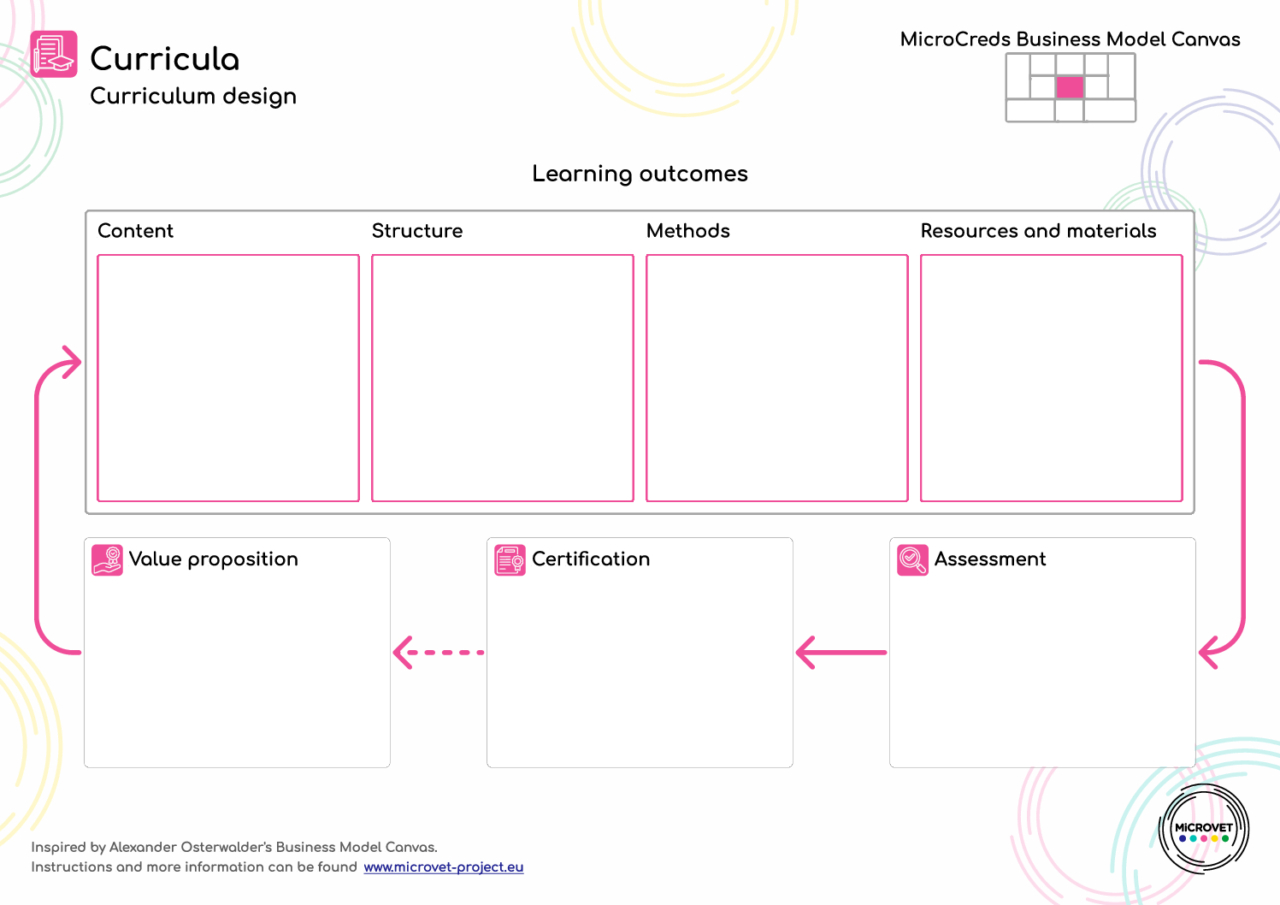
This worksheet is designed to help you structure the curriculum of your micro credential course. By using this worksheet effectively, you can ensure the course content aligns with the value proposition and meets the learner’s expectations, creating a meaningful and impactful learning experience.
It will help you answer the following questions:
- What are the learning outcomes that match the value proposition and the learner’s expectations?
- How do the course content, structure, teaching methods and materials, learning organisation and other factors contribute to the learning outcomes?
- How are the achieved learning outcomes assessed and certified?
How to use this worksheet:
1. Formulate Learning Outcomes
Start by defining the learning outcomes based on your course’s value proposition. For example, if your promise is to enhance practical work competences, outline the specific skills and results learners will achieve. Ensure these outcomes address the learner’s goals and expectations.
2. Define Key Curriculum Elements
Think through and summarise the essential components of the curriculum. This includes:
- Course Content: Topics, knowledge, and skills covered.
- Structure: The scheduling of lessons over time, the proportion of directed and self-directed learning.
- Teaching Methods: The mix of theory, practical work, independent tasks, and e-learning tailored to the learner persona.
- Materials and Resources: Key resources learners will use, such as manuals, tools, or digital platforms.
3. Plan Assessment and Certification
Decide how learning outcomes will be assessed. Will it be through exams, assignments, projects or continuous assessment? Clearly outline who will assess, when, and how. Additionally, describe the type of certificate learners will receive upon completion and ensure any relevant registration or employer communication is planned.
Key Considerations:
- Learner-Centered Approach: Regularly check that the curriculum elements align with the learner’s needs, goals, and lifestyle.
- Curriculum Standards: Ensure compliance with any applicable curriculum standards or national norms while maintaining flexibility to adapt.
Tips for Effective Use:
- Align with Value Proposition: Ensure that all curriculum elements consistently support and reflect the course’s value proposition.
- Flexibility: Be prepared to adjust the curriculum based on feedback and evolving needs.
- Consistency: Align the curriculum with the value proposition and learner journey to ensure coherence.
- Feedback-Driven Improvement: Use learner feedback to refine teaching methods, content, and organization for continuous improvement.
By following these guidelines, you can develop a curriculum that delivers real value to learners and ensures the success of your micro credential course.
Preview