Revenue Streams
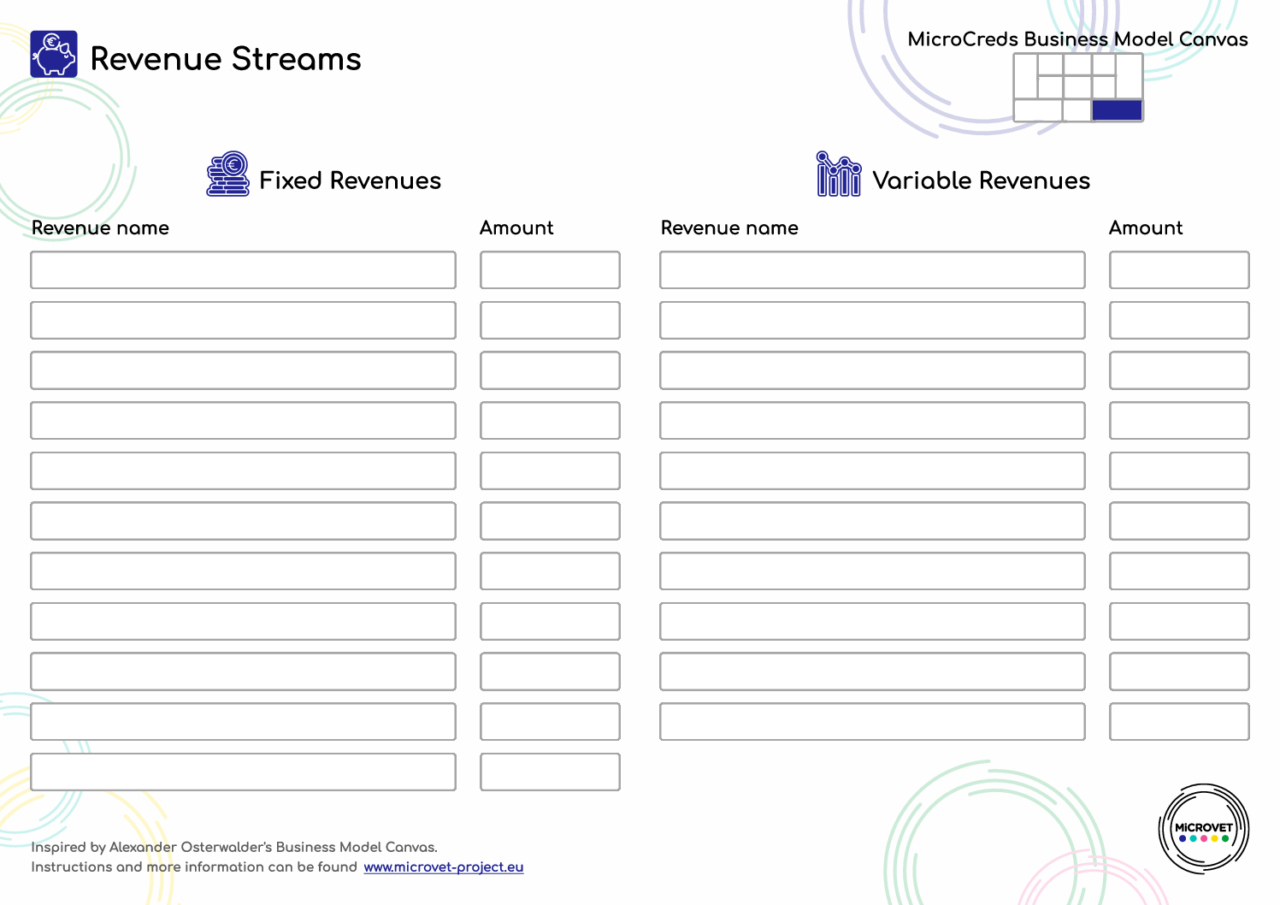
The Revenue Streams worksheet helps you organize and plan the income sources for your micro credential course. By classifying revenue into fixed and variable streams, you gain a clear understanding of the financial potential of your course. This worksheet is most effective when used in conjunction with the Cost Structure worksheet, allowing you to compare income with costs and assess overall profitability.
When designing a micro-credential course, it’s important to ensure the course fee covers fixed costs. Depending on the country and organisation, funding for micro-credential costs may come from government support, projects, employers, employment agencies, or learners themselves. These funding sources may also be combined. Consider your main revenue sources—how do your clients pay your organisation? Which pricing strategies work best for both you and the learner?
Depending on the type of training organisation, a micro credential course may function as a standalone, self-sustaining adult education offering, or as part of a formal educational program, where micro credential learners are integrated with other students. In either case, funding may come from various sources.
It will help you answer the following questions:
- What are the main revenue sources for the micro-credential?
- How can revenues and costs be compared?
- What pricing strategies and payment methods should be offered to learners
How to use this worksheet:
Revenue is divided into two main categories: fixed and variable revenues:
- Fixed Revenues:These are predictable income sources, such as subscriptions, licensing fees, or long-term contracts.
- Variable Revenues: These are income sources that can fluctuate, such as enrolment fees, sales of additional learning materials. Variable revenues often align with variable costs in the Cost Structure worksheet, such as expenses for extra learning materials or per-student support.
1. Identify the main revenue sources
List fixed and variable revenues and add the expected amount for each revenue source. The amount for fixed revenues should be a consistent figure, like a monthly or yearly fee. Estimate the amount for each variable revenue source, based on projected enrolments or past data. You can adjust these estimates later based on actual income.
2. Summarise and Review Your Revenues
- Calculate Total Revenues:Add up the amounts for both fixed and variable revenue sources. This total projected income will give you a clear picture of potential earnings and should be compared to the total costs in the Cost Structure worksheet to see if the course is financially sustainable.
- Adjust Regularly: Revisit this worksheet to update estimates based on actual income and enrollment trends. Reviewing both the Revenue Streams and Cost Structure worksheets together helps keep your financial planning accurate and balanced.
3. Use the Data for Strategic Planning
- Balance Revenues and Costs: Use this worksheet with the Cost Structure worksheet to ensure that revenues cover course expenses. This will guide decisions on pricing, budgeting, and areas for potential revenue growth.
Tips for Effective Use:
- Be Realistic: Use realistic estimates for revenues and align them with the cost estimates in the Cost Structure worksheet.
- Update Frequently: Keep revenue and cost estimates up to date, especially for variable income sources that may change with enrollment trends.
- Diversify Income Sources: To improve stability, consider multiple revenue streams. For example, additional learning materials to supplement fixed revenues.
- Create a Detailed Budget: Prepare a detailed budget based on the analysis of costs and revenues. This will give you a realistic view of your course’s financial requirements and potential profitability.
Preview