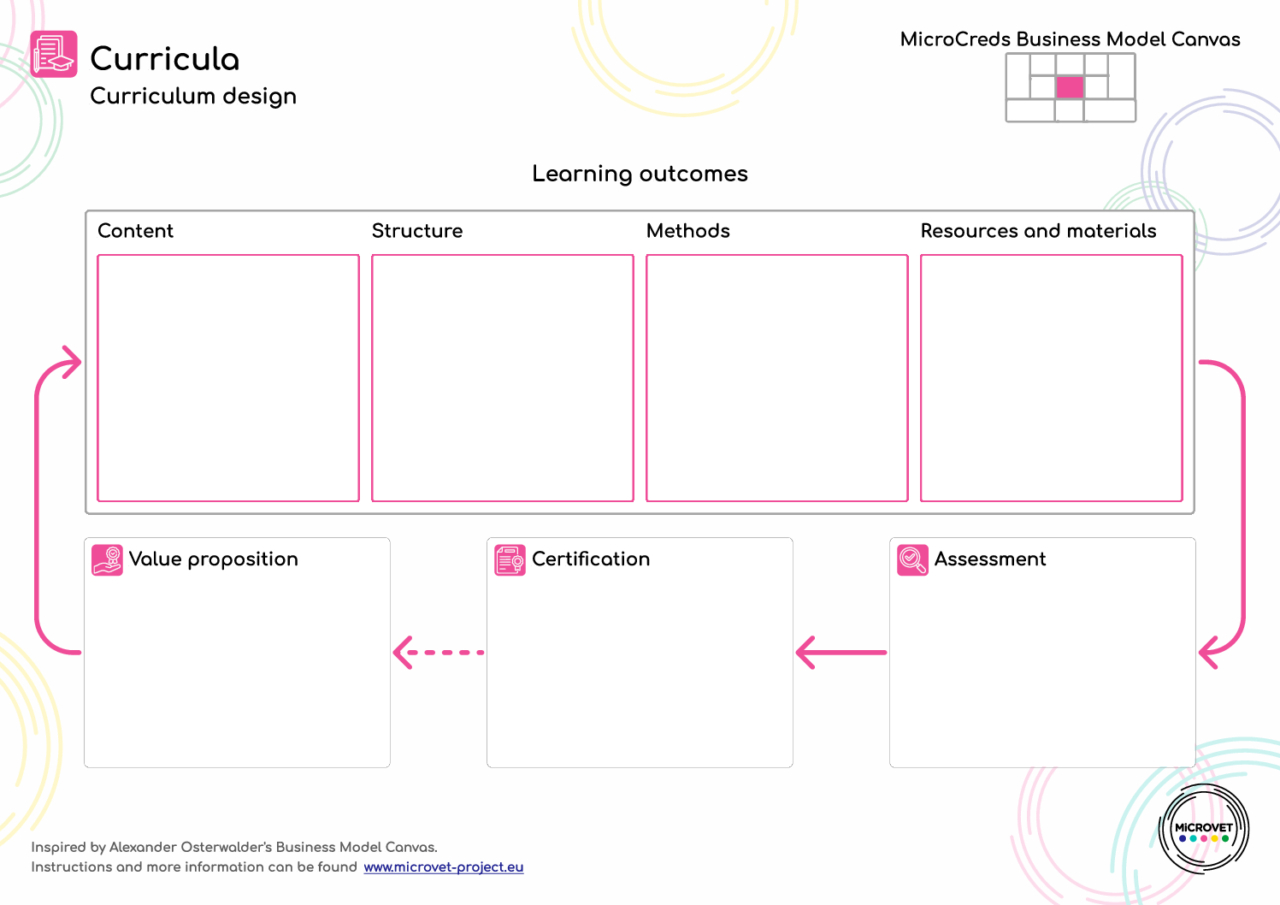
It will help you answer the following questions:
- What are the learning outcomes that match the value proposition and the learner’s expectations?
- How do the course content, structure, teaching methods and materials, learning organisation and other factors contribute to the learning outcomes?
- How are the achieved learning outcomes assessed and certified?
How to use this worksheet:
1. Formulate Learning Outcomes
2. Define Key Curriculum Elements
- Course Content: Topics, knowledge, and skills covered.
- Structure: The scheduling of lessons over time, the proportion of directed and self-directed learning.
- Teaching Methods: The mix of theory, practical work, independent tasks, and e-learning tailored to the learner persona.
- Materials and Resources: Key resources learners will use, such as manuals, tools, or digital platforms.
3. Plan Assessment and Certification
- Learner-Centered Approach: Regularly check that the curriculum elements align with the learner’s needs, goals, and lifestyle.
- Curriculum Standards: Ensure compliance with any applicable curriculum standards or national norms while maintaining flexibility to adapt.
Tips for Effective Use:
- Align with Value Proposition: Ensure that all curriculum elements consistently support and reflect the course’s value proposition.
- Flexibility: Be prepared to adjust the curriculum based on feedback and evolving needs.
- Consistency: Align the curriculum with the value proposition and learner journey to ensure coherence.
- Feedback-Driven Improvement: Use learner feedback to refine teaching methods, content, and organization for continuous improvement.