Cost Structure
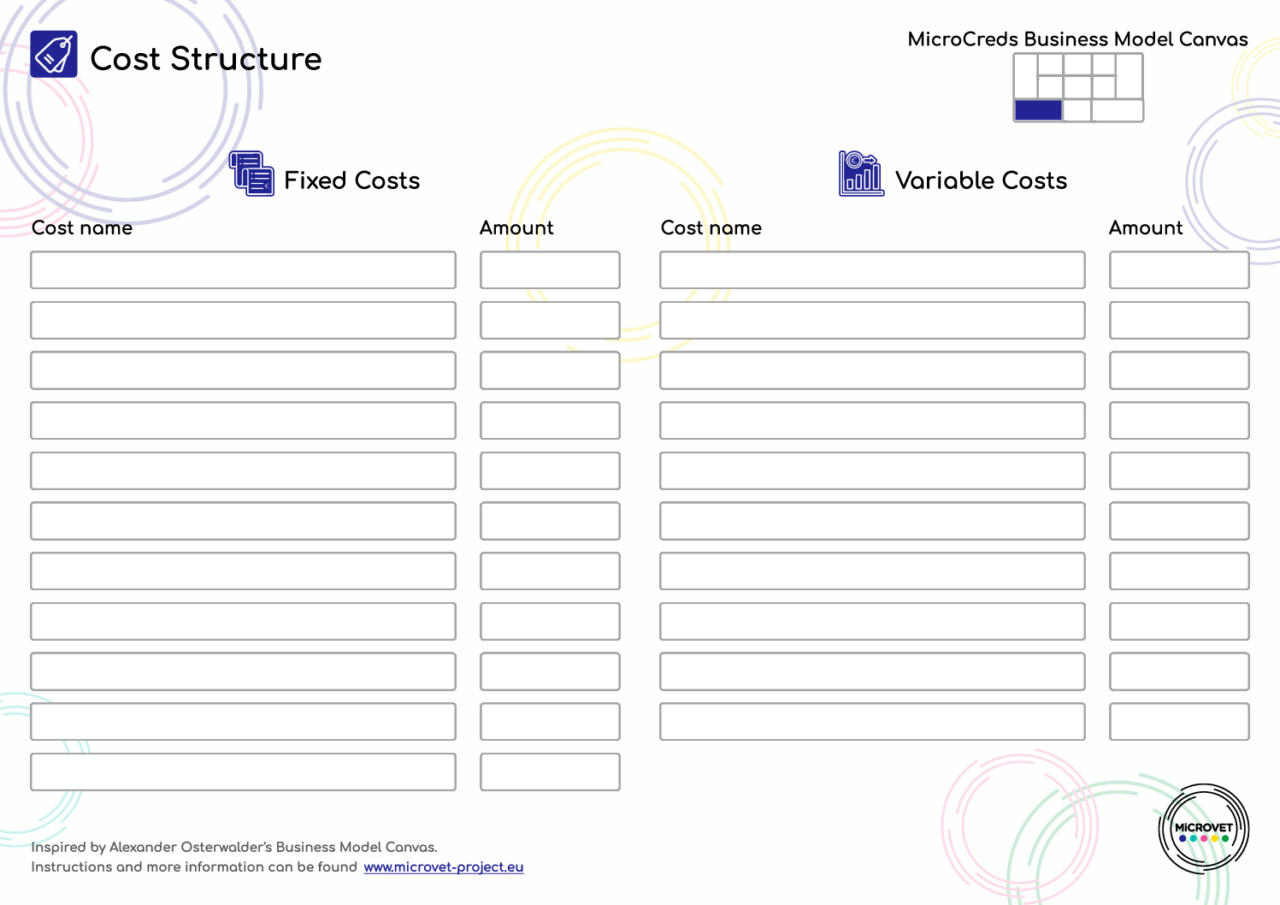
The Cost Structure worksheet is designed to help you clearly identify and organise the costs involved in running your micro credential programme. This is essential for budgeting, setting fees, and ensuring financial sustainability.
It will help you answer the following questions:
- What are the main costs involved in running a micro credential programme?
- How can total costs be calculated for the programme?
- What steps should be taken to determine the break-even point and set a profit margin for the programme?
How to use this worksheet:
1. Identifying Costs
Costs are divided into two main categories: fixed costs and variable costs. For each cost you will also record the amount to gain a clear picture of the programme’s overall expenses.
Fixed Costs: Fixed costs are expenses that do not change with the number of participants. They are constant regardless of how many people enrol in the course. For each fixed cost, fill in the cost name and the corresponding amount to reflect the total for that item. Typical fixed costs include:
- Educator Salaries (if on a fixed contract)
- Training Facilities (e.g., room rental, utilities, equipment maintenance)
- Software Licences and Platform Fees (e.g., for a learning management system)
- Course Development Costs (for creating content and materials)
- Marketing and Advertising (if it’s a set campaign cost)
- Administrative Salaries (if unrelated to participant numbers)
Variable Costs: Variable costs change depending on the number of participants, the duration of the course, and whether it is delivered as in-person training or online learning. These costs rise or fall as more or fewer people enrol or you modify the length of the course. For each variable cost, add the cost name and the relevant amount, which may be an estimated total based on expected participant numbers. Examples of variable costs may include:
- Materials per Participant (e.g., training materials, supplies, equipment or digital resources needed for each learner)
- Hourly or Session-based Educator Fees (if they increase with more participants)
- Certification or Assessment Fees (based on the number of completions)
- Facilities Hire (if additional space is needed for larger groups).
- Technology or Platform Costs: (costs may vary depending on the number of users)
2. Calculating Total Costs
Add up your fixed and variable costs using the amount boxes to get the total cost of running the programme. This figure will help you set enrollment targets and pricing.
Total Cost = Fixed Costs + (Variable Cost per Participant × Number of Participants)
Example:
- Fixed Costs: €3,500
- Variable Costs: €1,000 (for 20 participants)
- Total Cost = €3,500 + €1,000 = €4,500
3. Setting Course Fee
Additional Aspects to Consider
- To thoroughly assess each course’s cost-effectiveness and profitability, it is advisable to create a more detailed, supplementary budget for each course.
- You should calculate the break-even point to determine the number of learners required to cover all programme costs (i.e., break even) and the appropriate course fee per participant
- To make the programme sustainable and allow for reinvestment, you’ll likely want to set a profit margin above the break-even point. Let’s say you aim for a 20% profit margin:
- Calculate Target Profit: Multiply the total cost by your desired profit margin.
Example: If total costs are €4,500, then a 20% profit margin would be: €4,500 × 0.20 = €900 - Set Revenue Target: Add your profit goal to the total cost.
Example: €4,500 + €900 = €5,400 - Determine Required Fee per Participant: Divide your revenue target by the expected number of participants to set a fee that covers both costs and profit.
Example: If you expect 20 participants, the fee should be: €5,400 ÷ 20 = €270 per participant
Tips for Effective Use:
- When calculating course development and delivery costs, consider the Key Activities, Key Resources, and Key Partners sections, as they represent your main cost drivers.
- Review Regularly: Costs may change over time, so update your worksheet regularly to keep it accurate.
- Align Costs with Value: Ensure costs contribute to a valuable learning experience.
- Analyse Profitability: Beyond covering costs, aim for a revenue that supports reinvestment in programme quality and growth.
Preview