Value Proposition
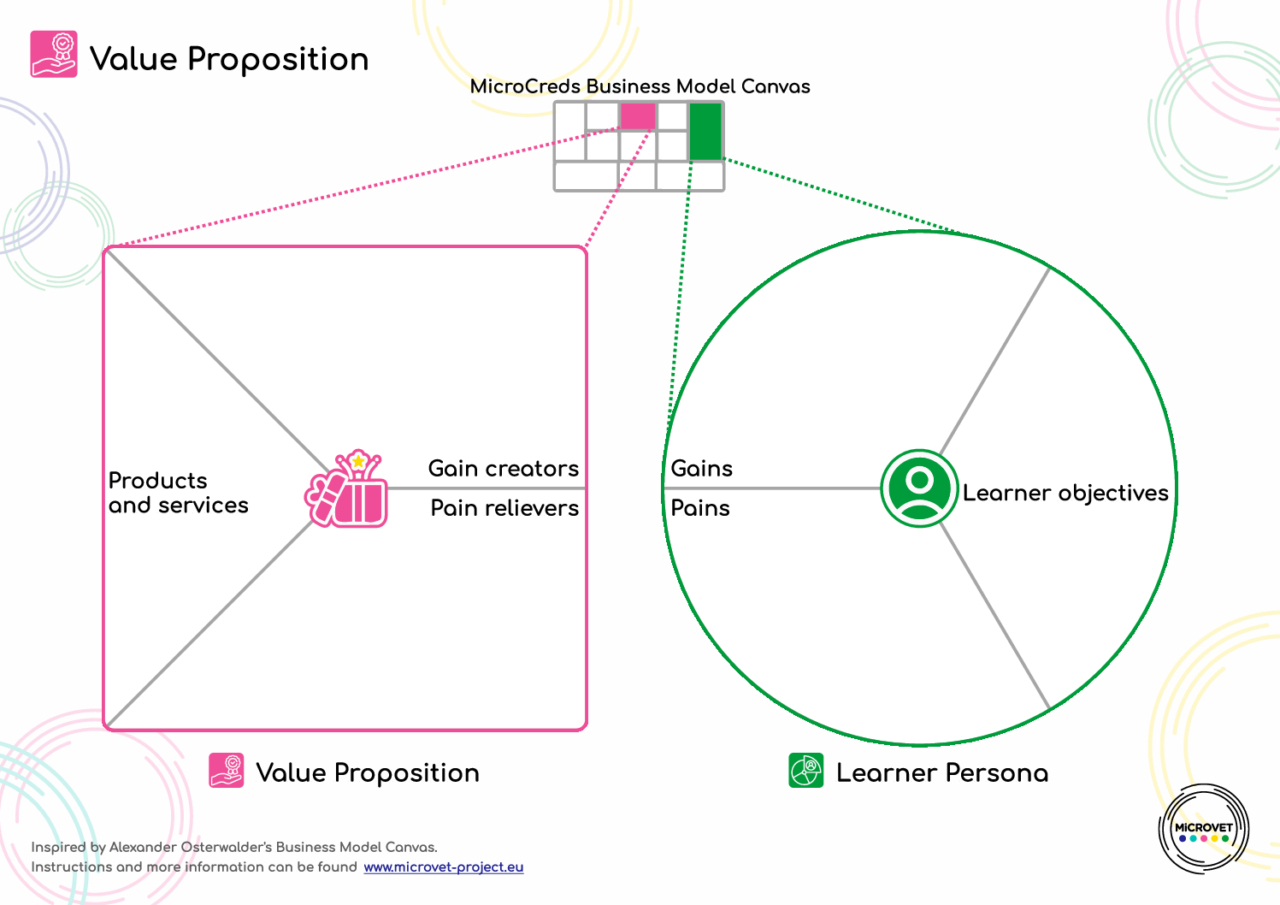
This worksheet is designed to help you develop a clear and compelling value proposition for your micro credential course. By identifying the unique benefits your course offers and how it addresses specific learner needs, this tool ensures that your course stands out and provides tangible value to learners.
By completing the Value Proposition Worksheet, you’ll ensure your micro credential course is not only attractive to learners but also strategically designed to meet their specific needs and address their challenges in a meaningful way. This approach increases the likelihood of learner satisfaction, completion, and success in their vocational fields.
It will help you answer the following questions:
- What value does your micro credential program offer participants?
- How can you address participants’ specific needs and expectations?
How to use this worksheet:
1. Start with the Learner Persona (Circle on the Right)
- Learner Aims
Outlines the specific needs that persona aims to accomplish. These could include functional goals (e.g., acquiring a new skill, securing a job), social needs (e.g., expanding a professional network), or emotional aspirations (e.g., building confidence). Be specific and learner-focused, building on the insights you gathered during the creation of the learner persona.
- Identify Learner Pains
Outline the primary challenges or barriers that learners face related to the course content or industry. This could be a lack of time, skill gaps, difficulties to study alongside work; restricted ability to take time off from work for learning purposes, or financial limitations. Recognising pains is crucial for developing course elements that specifically address and reduce these challenges.
- Identify Learner Gains
Detail the benefits or value they hope to gain from completing the course. This may include professional development, career advancement, acquiring specialised skills, expanding network or to be recognised in their work-place. Knowing the expected gains helps ensure the course content aligns with learner goals.
Are you wondering what is the difference between Learner Objectives and Gains? Objectives focus on what the learner wants to do or achieve, for example: «I want to learn data analysis techniques to analyze my company’s sales data.» Gains describe the result or value the learner hopes to gain, for example: «With data analysis skills, I can work faster and more efficiently, gain recognition, and feel greater satisfaction with my accomplishments.»
2. Move to the Value Proposition (Box on the Left)
- Define Products and Services
This section outlines the specific offerings of your micro-credential course, such as modules, learning outcomes, tools, resources, or support services. These are directly linked to the Learners Objectives on the right side, as they represent the solutions you provide to help learners achieve their goals.
- Identify Pain Relievers
This section describes how your course design reduces or eliminates the challenges and frustrations learners face. Pain Relievers are tied to the Pains on the right side, ensuring that your offering effectively addresses the problems and barriers learners experience.
- Develop Gain Creators
This section focuses on how your course delivers positive outcomes or benefits, such as improved career opportunities or enhanced confidence. Gain Creators are directly connected to the Gains on the right side, showing how your course meets learners’ aspirations and creates value.
Tips for Effective Use:
- Be Specific: The more detailed you are in each section, the more targeted your value proposition will be. Focus on clear, specific offerings and benefits.
- Align with Learner Needs: Refer back to the Learner Persona to ensure each element of the value proposition is directly aligned with learner needs and challenges.
- Think About Differentiation: Consider what sets your course apart from similar offerings. What unique gains or pain relievers make this course especially valuable?
- Revise Based on Feedback: After delivering the course, revisit this worksheet. Use learner feedback to refine and enhance the value proposition for future versions of the course.
Preview