Key Resources
This worksheet is designed to complement the Key Activities worksheet. While the Key Activities worksheet outlines the critical steps for creating and delivering your course, this worksheet ensures that each step is supported by the necessary resources for effective completion. By aligning resources with specific activities, you’ll foster a systematic, resource-efficient approach to course development and delivery.
Using the Key Resources worksheet alongside the Key Activities worksheet will provide a complete picture of both what needs to be done and what resources are required, helping you deliver a valuable microcredential course.
It will help you answer the following questions:
- What are the key resources required for the development and delivery of a micro credential course?
- How should resources be aligned with each key activity to ensure systematic and efficient course development?
How to use this worksheet:
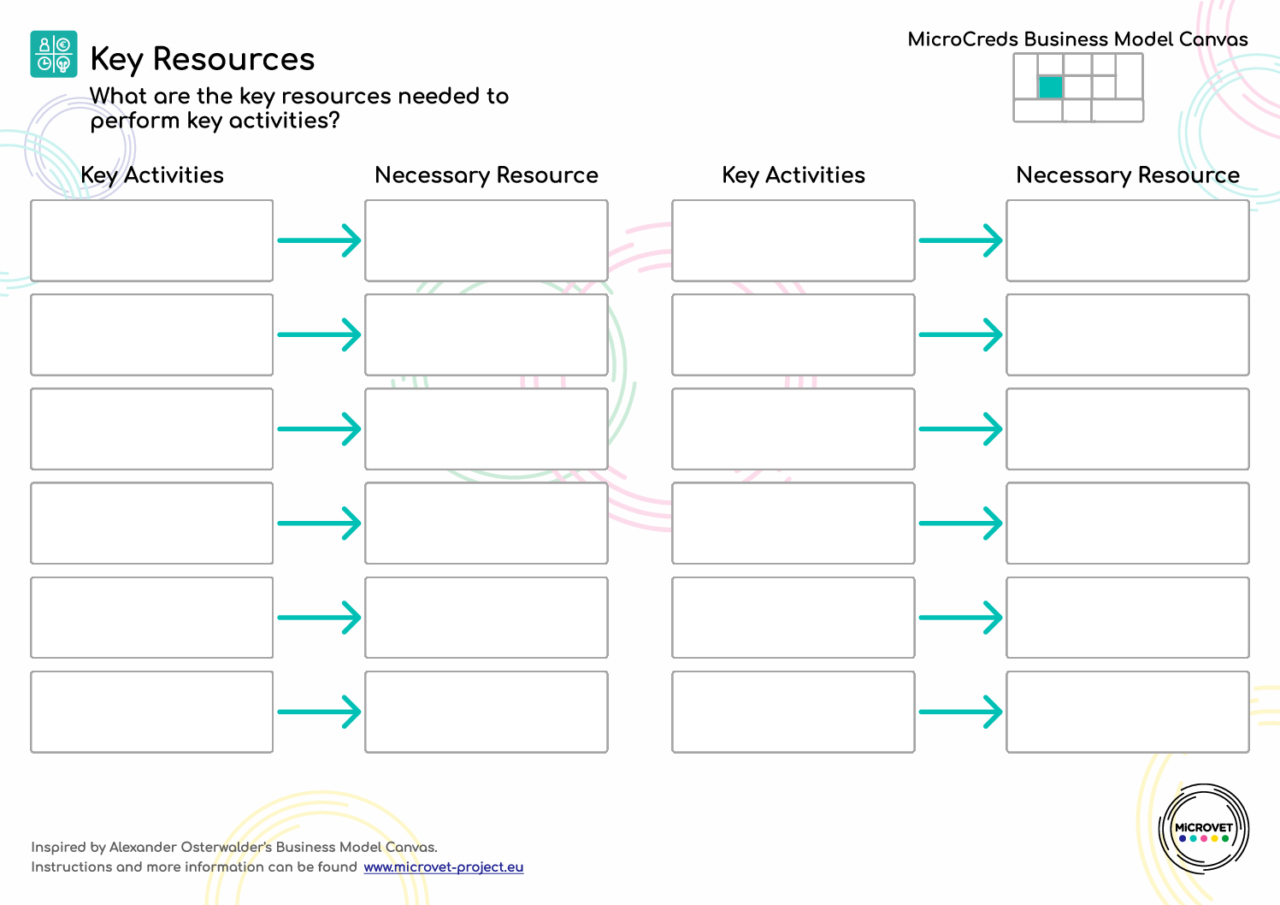
1. List Key Activities from the Key Activities Worksheet
Begin by copying each essential activity required for course development and delivery into the Key Activity boxes. The aim is to create a clear alignment between activities and their required resources.
2. Align Resources with Each Activity
For each key activity listed, add the resources required to complete that activity in the Necessary Resource box next to it. Resources may include personnel (e.g., subject matter experts, instructional designers), technologies (e.g., Learning Management Systems, software), funding, or physical materials.
This setup enables you to directly link each activity with its resource requirements, making tracking and management more straightforward.
3. Review and Adjust as Needed
Once all activities and resources are listed, review the worksheet to identify any resource surplus or shortage. This review process allows you to optimise resource allocation, ensuring that no resource is underused or overburdened.
As your course develops and changes, continually update this worksheet to reflect additional needs or changes in resource availability.
Tips for Effective Use:
- Complete Coverage: Make sure to include all relevant resources, not just physical ones but also intangibles like software licences, intellectual property, and platform access..
- Prioritisation: Rank resources by importance and availability to address critical needs, especially when resources are limited.
- Collaboration: Involve team members responsible for managing or deploying resources to gather and include their insights and ensure that they understand their roles in supporting key activities.
Preview