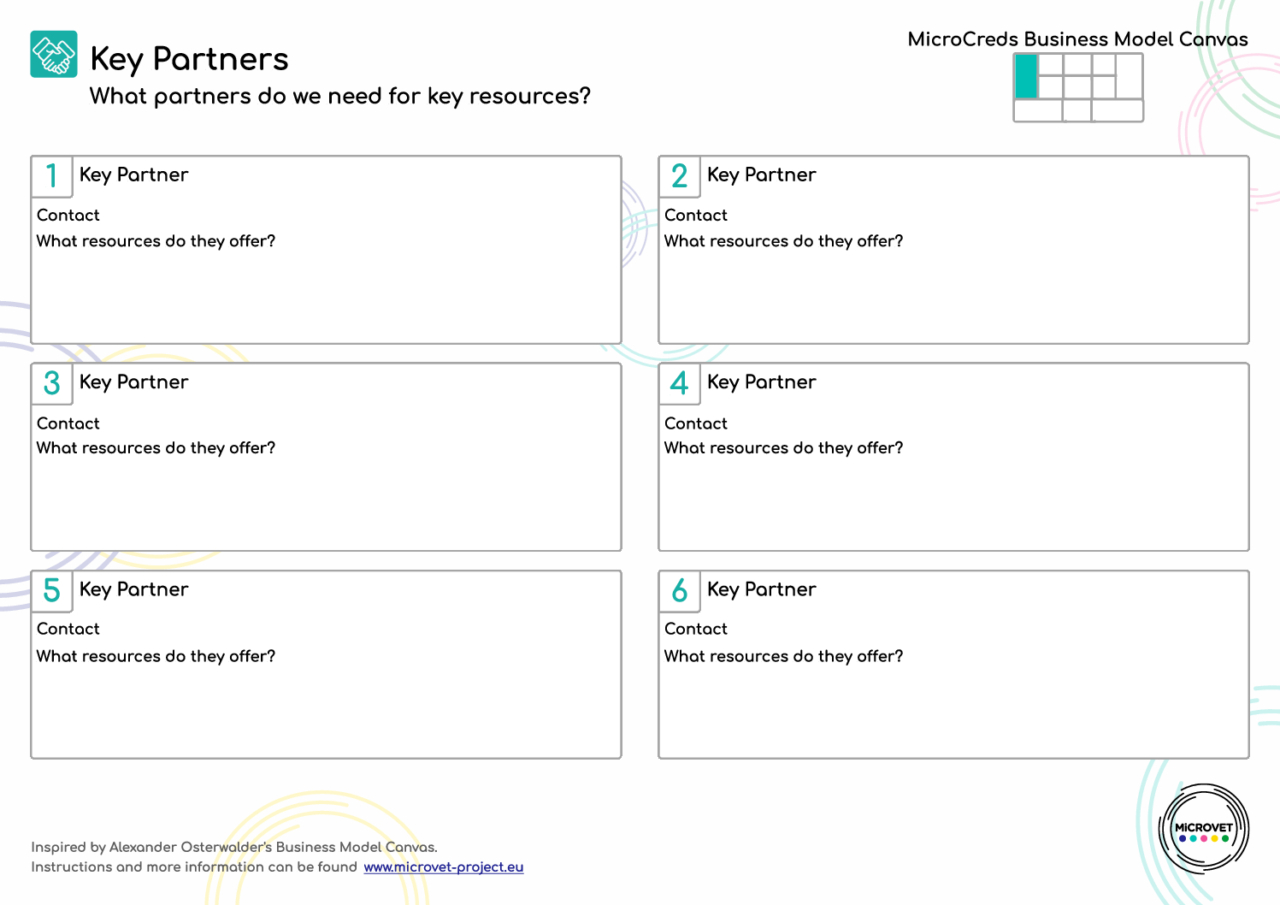
Key Partners
This worksheet is designed to map out and organise the key partnerships required to successfully deliver your microcredential course. Identifying these partners and understanding the resources they provide will ensure you have the necessary support to achieve your course objectives.
By fully completing this Key Partners worksheet, you can ensure that all critical partnerships are established, properly documented, and actively supporting the success of your microcredential course.
It will help you answer the following questions:
- Who are the key partners necessary for the successful delivery of a micro credential course?
- What specific resources can each partner provide?
How to use this worksheet:
1. Identify Key Partners:
Each section of the worksheet represents a different key partner. Begin by listing the organizations, institutions, or individuals who will play a critical role in the success of your course.
Consider partners who contribute to different aspects of your course, such as content creation, technology provision, industry expertise, financial support, marketing, certification authority etc.
2. Detail the Contact Information:
For each partner, provide the contact information of the primary person or team within that organisation. This should include their name, role, email, and phone number, ensuring you can easily reach them when needed.
This section is crucial for maintaining effective communication and collaboration throughout the course development and delivery.
3. Identify the Resources Provided:
Under this heading, describe the specific resources each partner will provide. This could include financial resources: Funding, grants, or sponsorships; technical resources: access to learning platforms, software, or IT support; content resources: subject matter expertise, instructional materials, or curriculum design; logistical support: facilities, equipment, or administrative assistance.
Clearly outline what each partner is responsible for and how their contributions align with the overall goals of your micro credential course.
4. Assess and Prioritise Partnerships:
Once all partners are listed, assess which ones are most critical to the success of your course. Highlight these partnerships and ensure that their roles and responsibilities are well understood by all stakeholders.
Contingency plans: Evaluate alternative partners or backup options in case a key partner is unable to deliver as anticipated.
5. Review and Update Regularly:
Partnerships often evolve, so it’s essential to revisit this worksheet regularly. Update the contact details, resource contributions, and any changes in the partnership agreements as the course progresses.
Implement a feedback loop with your partners to continuously improve the collaboration and address any challenges early on.
Tips for Effective Use:
- Clear Communication: Maintain open lines of communication with your partners. Regular updates and meetings will help ensure that everyone is aligned and that the partnership remains productive.
- Mutual Benefit: Consider what value you can offer to your partners in return. Successful partnerships are often built on mutual benefit, where both parties gain from the collaboration.
- Documentation: Keep detailed records of agreements, responsibilities, and outcomes. This documentation can serve as a reference for future courses and help in managing expectations.
Preview