Course Quality
The quality of micro-qualification courses is a crucial component of the value proposition. Different aspects of quality also influence the planned resources, costs, and benefits associated with the courses. This worksheet will assist you in considering various aspects of course quality and their connections to other elements of the model.
It will help you answer the following questions:
- What factors should be considered when evaluating the quality of courses?
- What are the quality indicators?
- How can data be collected and analyzed?
How to use this worksheet:
1. Identify Key Elements Linked to Course Quality
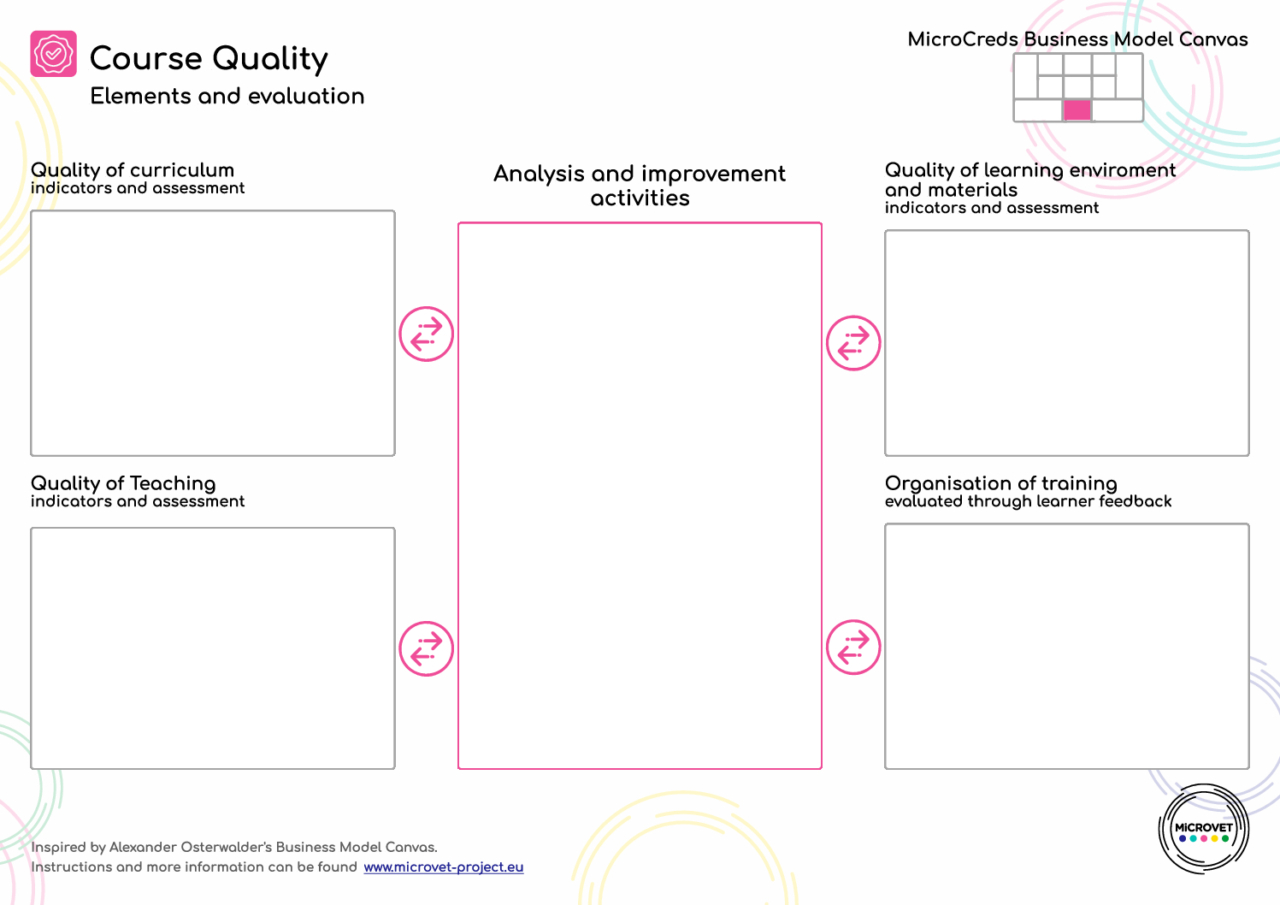
Reflect on which components of the course are directly related to the quality of the value proposition. Typically, these key elements include:
- Curriculum
- Teacher
- Training facilities and materials
- Learners feedback
These factors significantly impact the learner’s experience. Document these elements in designated boxes for further discussion.
2. Determine Quality Indicators and Quality Assurance Methods
Assess each key element’s quality indicators and methods for ensuring their effectiveness. For instance:
- The curriculum’s quality may be confirmed by compliance with professional standards, validation by national agencies or development by industry experts.
- Teacher quality can be assessed through their skills, experience, or feedback evaluations from previous learners.
- Teaching materials and learning environments should meet established requirements or receive learner evaluations.
- The delivery and organisation of learning should comply with established standards or be evaluated through learner feedback.
3. Record the data collection methods for each key element.
- Outline Processes for Data Collection and Analysis:
Consider how, when, and to what extent quality is measured for each element. Activities may differ; for example, assessing curriculum quality may not need to be done after every course. However, most organisations gather learner feedback regularly. Planning questionnaires and collecting results from feedback surveys should be included in your key activities list. - Plan for Result Analysis and Training Improvement:
Analysis and improvement efforts can influence all other model elements. For example, inadequate learning materials may necessitate updates, leading to additional costs, while neglecting this could impact revenue. Evaluations of learning organisation can affect key activities. Consider what changes are critical, what can wait, and how to implement these changes effectively. Document analysis and improvement actions in the designated box.
Tips for Effective Use:
- Use Existing Quality Assessment Systems: Leverage established models and methods for educational quality assurance that are already available. Integrate these standards into micro-credential courses.
- Encourage Curiosity: Gathering feedback from learners is an excellent way to understand their perceptions of course quality. Approach them openly and honestly; remember that constructive criticism is invaluable for improving quality.
- Review and Revise Periodically: Regularly assess the quality elements, indicators, data collection methods, etc., to ensure alignment with your course offerings and make necessary adjustments as required.
Preview